
By: Greice Souza
Para ler o artigo em português clique aqui
Leading across cultures is not about mastering every language or knowing every tradition, but about listening, adapting, and developing Cultural Intelligence. In an increasingly globalized work environment, with geographically dispersed teams, this skill is no longer optional – it has become a strategic necessity. Anyone who thinks they can lead a team the same way in Brazil, the United States, or Peru is mistaken. Effective leadership is about adapting, connecting, and delivering anywhere in the world.
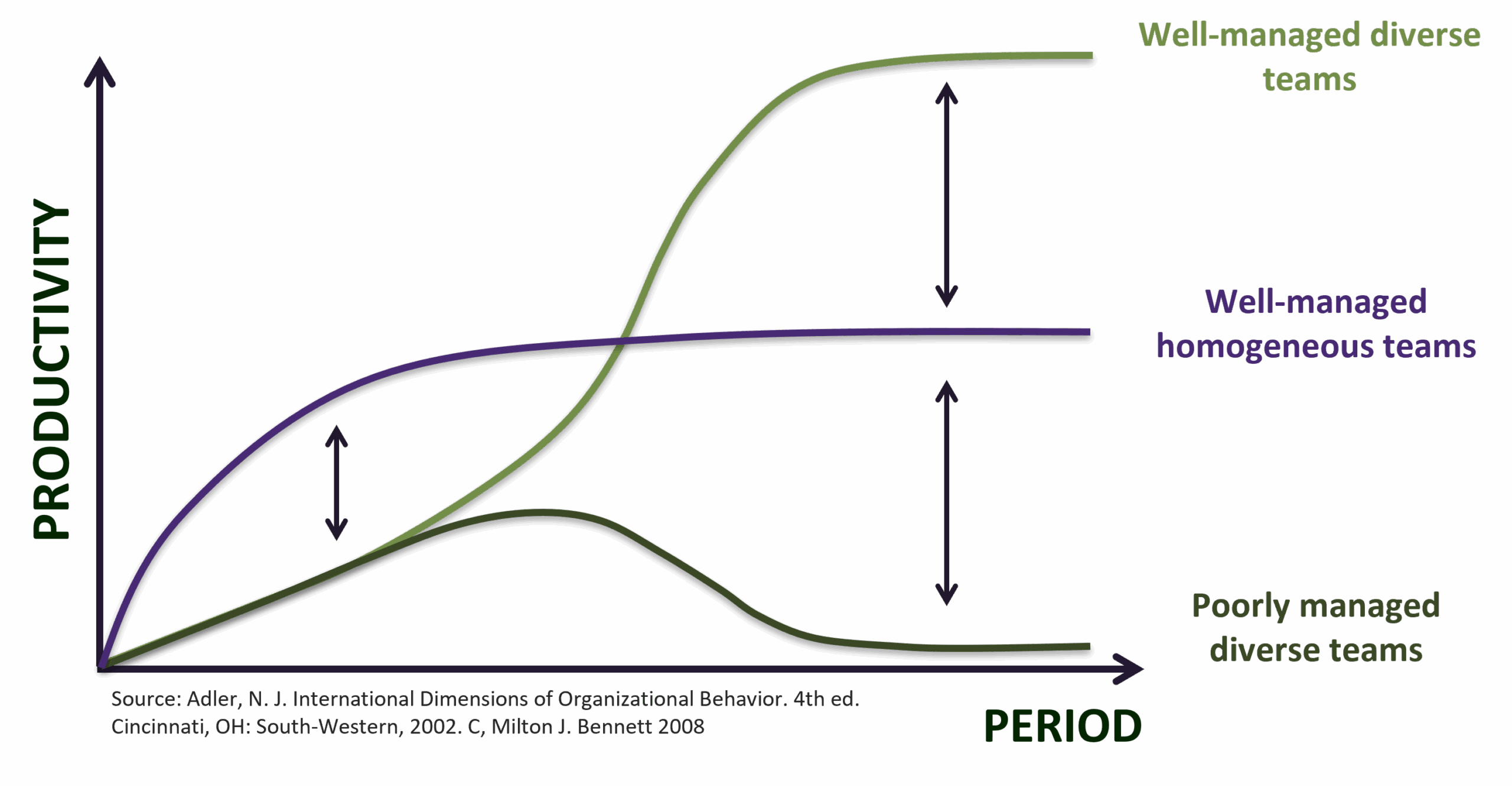
Research shows that, when effectively managed, differences don’t hinder performance—they strengthen it. As illustrated in the following chart, well-led diverse teams outperform, over time, even well-managed homogeneous teams.
FIGURE 1: Well-managed Diverse Teams
That is why leading across cultures requires careful planning: it’s essential to identify and understand the different cultural patterns present in the team and adapt approaches when necessary. For leadership to truly be effective and for the team to achieve the desired performance, good planning needs to follow some intentional steps:
- Know your team: Start with a cultural mapping of your team, beginning with questions such as: Who are the people I lead? What are their cultural values, communication styles, etc.?
- Seek self-awareness: Before judging differences, understand your own cultural biases. Ask yourself: Am I finding this behavior inappropriate because I’m seeing it through my own cultural lens?
- Adapt your communication: Language, tone of voice, and the way messages are delivered must be adjusted according to the team’s profile. The same communication style does not always work with different employees.
- Align expectations: In multicultural teams, it is normal to have different views on deadlines, feedback styles, and time management. Good leadership must align expectations with the team regarding issues that are fundamental to performance.
- Maintain active listening and flexibility: Diverse teams can greatly enrich the professional environment, but they also require careful attention. Create spaces for exchange, recognize when to set standards, and when to adapt to differences—since many of the most valuable opportunities emerge from those very differences.
Ultimately, planning relies on a fundamental competence: Cultural Intelligence. More than a soft skill, Cultural Intelligence is key for global, virtual, and inclusive professionals. It refers to the ability to relate to and work effectively in culturally diverse situations (Forbes, 2020). Cultural Intelligence allows leaders to transform differences into opportunities and to build bonds that transcend borders, facilitating connections between different ways of being human.
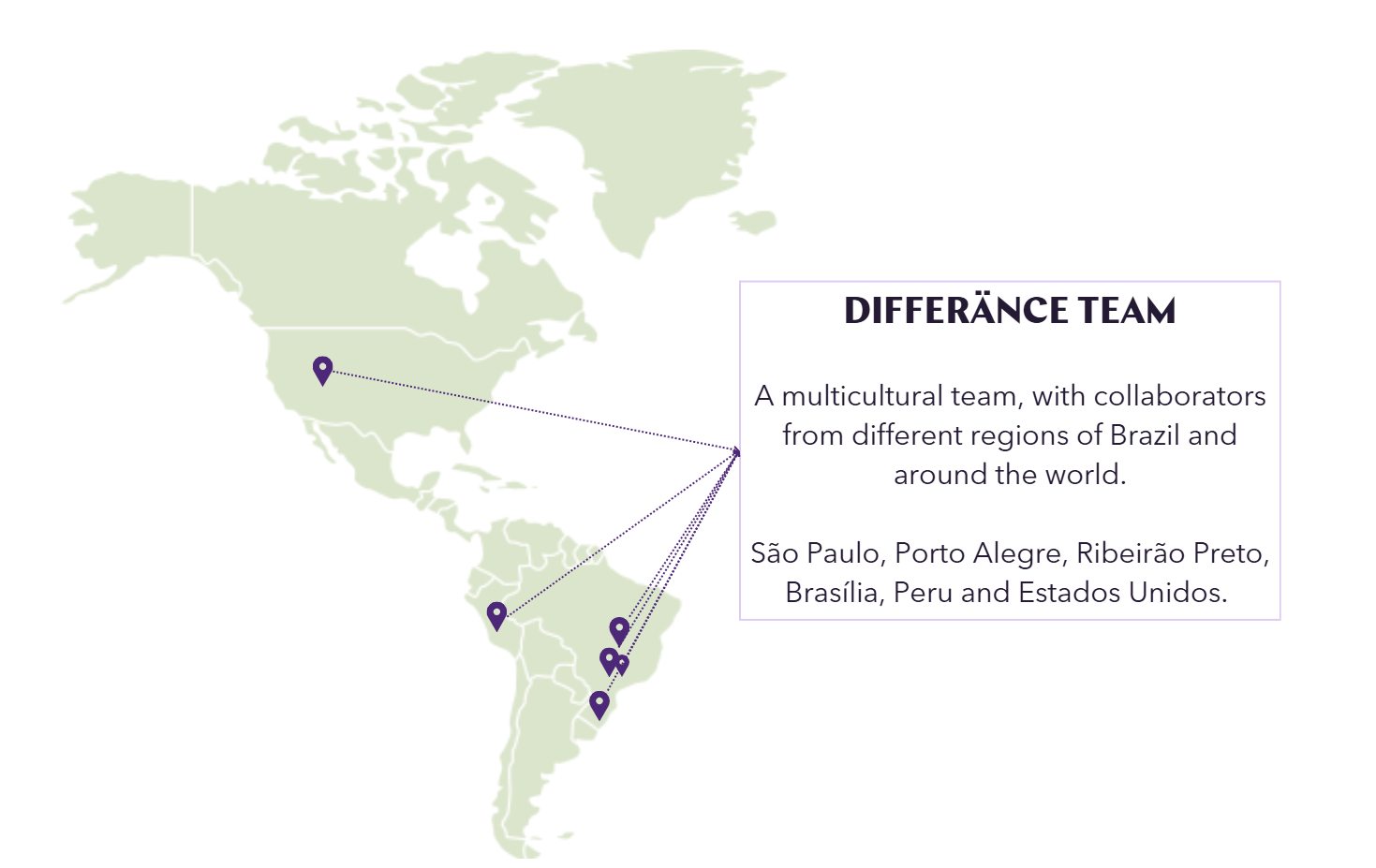
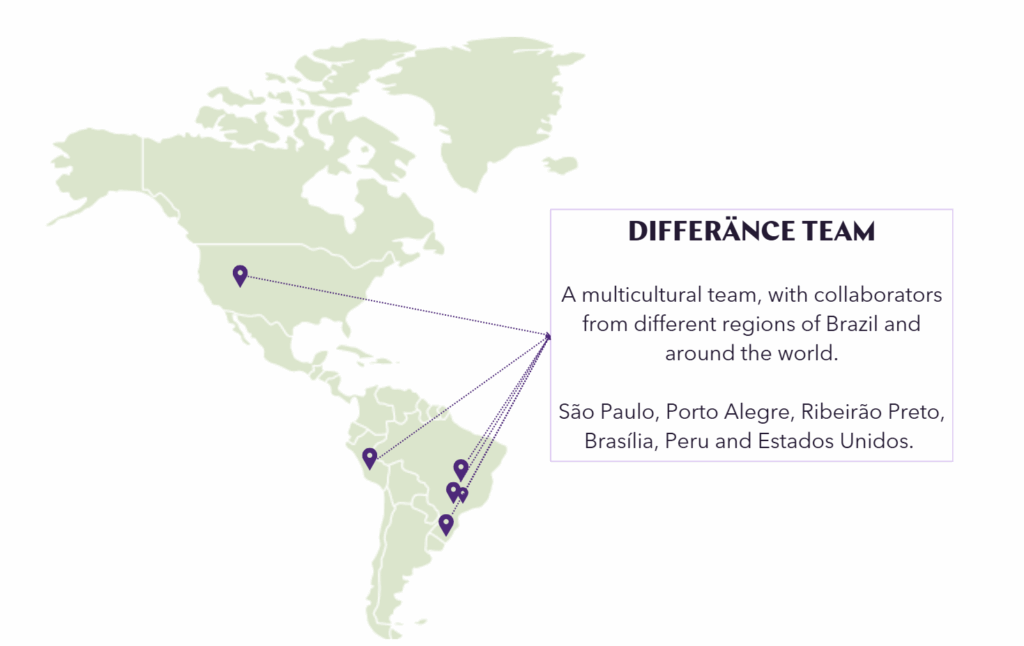
Take, for example, the Differänce team: a remote and multicultural group, made up of staff from various backgrounds and from different regions of Brazil and the world: São Paulo, Brasília, Ribeirão Preto, Porto Alegre, Peru, and the United States (see Figure 2). Faced with such cultural diversity, would it make sense to apply a single leadership style to all of them?
FIGURE 2: Geographical Dispersion of the Differänce Team.
Differänce’s team members have many similarities and differences in each of their perspectives on leadership, communication styles, and professional approaches. Leading effectively is, above all, about knowing how to adapt: recognizing what motivates, what builds trust, and what brings meaning to each person, while respecting their cultural values.
Leadership certainly holds different meanings for different people. In Peru, it may be associated with preserving harmony; in Brazil, with building trust and close relationships. And even within the same country, perceptions of leadership vary. In Porto Alegre, leadership may mean balancing authority with participation, valuing transparency and dialogue. In Ribeirão Preto, leadership is built on close relationships, and trust is cultivated daily.
Therefore, leading across cultures goes far beyond following a set formula. It is about adapting to different cultural contexts, practicing active listening, and cultivating the sensitivity to adjust one’s leadership compass without losing direction. Culturally competent leaders do not master every culture, but they do know how to build bridges, draw value from differences, and enhance what each person has to offer.